

- Thread starter
- Staff
- #1

Dadparvar
Staff member
- Nov 11, 2016
- 11,174
- 0
- 6
On July 29, the Malaysian government announced that around 5,000 Rohingya refugees will be repatriated to Myanmar, where they face an obvious risk of persecution or torture. The government later clarified that the refugees will not be repatriated if they face a risk of persecution or torture. Earlier in June, a petition calling for the removal of the Rohingya community from Malaysia had garnered at least 280,000 signatures within one week.
Rights group Pusat KOMSAS responded to the petition, stating that, “Narratives like this deliberately portray the Rohingya community as only taking from the country, while ignoring the fact that many of them contribute to Malaysia’s economy despite living in precarious conditions and facing frequent exploitation.”
These recent events have rekindled my bittersweet memory of working as a volunteer at an exhibition titled “To Kill A Movement” organized by Amnesty International Malaysia from June 21 to July 5.
Firstly, it’s a sweet memory because I had the opportunity to network with new people and work alongside them, spending my weekend meaningfully. On the other hand, the memory is somehow tainted by the display of horrific images of the destruction caused by the conflict in Myanmar following the military junta’s coup d’état in 2021.
The primary purpose of the exhibition was to showcase photos taken by journalists during the conflict in Myanmar and the disturbing images of children being tortured by the military. During the launch of the exhibition, we also had a panel discussion with speakers from diverse backgrounds, including those who had lived the experience.
The theme “To Kill A Movement” is derived from Myanmar’s long struggle linked to wider movements against authoritarianism across borders. A movement rarely dies in a single blow. Rather, what kills any legitimate movement is persistent repression. The cornering, exhaustion, fracturing, starvation, enforced disappearance, and defamation effectively kill a movement from pursuing its end goal.
It is heart-wrenching to even visualize the cruelty that the people in Myanmar had to experience merely because they were born Muslims in their country. It provokes me further when Malaysians relentlessly seek the removal of refugees from the country without having regard to the fact that the very removal could not only jeopardize someone’s life but endanger an entire generation.
This is the reality of today’s humanity that exists not only in Malaysia but in all parts of the world, where geographical privilege renders someone born in a secure country losing sight of the realities of those born in a conflict country. State leaders cannot advocate for justice, equality, and a rules-based order when they actively engage in inhumane actions or are passively complicit in genocide by returning refugees to countries where they face a risk of persecution or torture.
It is essential to emphasize here that although Malaysia has not ratified the 1951 Refugee Convention, the principle of non-refoulement is universally recognized and obliges all countries to refrain from returning refugees who are at risk of persecution or torture. As the conflict in Myanmar is ongoing, particularly the perpetration of violence against the Rohingya community, Malaysia has an international obligation to provide temporary shelter for the refugees or deport them to a third country where they do not face a risk of persecution or torture.
Although the exhibition was focused on the destruction caused to the Myanmar community in general, the risk of repatriating the Rohingya community to Myanmar is nonetheless a relevant issue here, as they face an increased risk of torture and persecution during the military junta’s administration.
Here are some of the pictures that I had taken during the exhibition:

These pictures show the bombing of residential areas and schools.
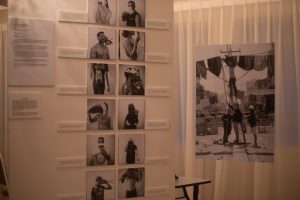
These are pictures of online protesters using flowers as a weapon of defiance.

These are a few of nearly 1,000 images taken after the abduction, torture, and extrajudicial killing of children, women, and men, and published in military-controlled Telegram channels since 2021.

These pictures show the systemic targeting of educational and civilian infrastructures, subjecting schools and hospitals to relentless artillery fire and aerial bombardments.

This is a photo of a soldier being taken care of by a comrade in a bunker following an arm amputation, as most of the hospitals were destroyed in the bombing.


These cloths hung from the ceiling were an imitation of how htamein, the traditional cloth long associated with women’s daily life, was transformed by women and gender diverse communities as a weapon of defiance and to confront the misogyny and superstition embedded in military power.
Although Malaysia is not a party to the Refugee Convention, it hosts around 181,000 refugees and asylum-seekers on humanitarian grounds, with 85 percent of them from the Rohingya community. In July, Malaysia also launched a national registration system for refugees and asylum-seekers as the single authoritative registration in the country, aiming to replace the registration system managed by the UNHCR.
Relatedly, Amnesty International Malaysia’s spokesperson Divya Shesshan said, “While we welcome the government’s efforts to develop a national refugee registration system and move towards formal recognition of refugees in Malaysia, any transition away from UNHCR registration must not leave refugees and asylum-seekers without access to protection procedures.” This, in essence, underscores the nuances behind policies involving refugees and asylum-seekers, as well as the importance of the government stepping up to implement the policies.
Ultimately, to address the situation involving refugees more effectively, we, as human beings, must cultivate compassion and forbearance within ourselves. With the prevalence of populist-based politics around the world, the way citizens treat vulnerable communities is crucial in determining whether a nation can be pressured to uphold its international duty towards these “unwelcome guests.”
While recognizing the collective legal responsibility of states is vital, we should also advocate for the moral responsibility of society in a country if we wish to see a world where people fleeing conflicts are welcomed warmly rather than expelled coldly.
The post Malaysia dispatch: revisiting the “To Kill A Movement” exhibition appeared first on JURIST - News.
Continue reading...
Note: We don't have any responsibilities about this news. Its been posted here by Feed Reader and we had no controls and checking on it. And because News posted here will be deleted automatically after 21 days, threads are closed so that no one spend time to post and discuss here. You can always check the source and discuss in their site.
Rights group Pusat KOMSAS responded to the petition, stating that, “Narratives like this deliberately portray the Rohingya community as only taking from the country, while ignoring the fact that many of them contribute to Malaysia’s economy despite living in precarious conditions and facing frequent exploitation.”
These recent events have rekindled my bittersweet memory of working as a volunteer at an exhibition titled “To Kill A Movement” organized by Amnesty International Malaysia from June 21 to July 5.
Firstly, it’s a sweet memory because I had the opportunity to network with new people and work alongside them, spending my weekend meaningfully. On the other hand, the memory is somehow tainted by the display of horrific images of the destruction caused by the conflict in Myanmar following the military junta’s coup d’état in 2021.
The primary purpose of the exhibition was to showcase photos taken by journalists during the conflict in Myanmar and the disturbing images of children being tortured by the military. During the launch of the exhibition, we also had a panel discussion with speakers from diverse backgrounds, including those who had lived the experience.
The theme “To Kill A Movement” is derived from Myanmar’s long struggle linked to wider movements against authoritarianism across borders. A movement rarely dies in a single blow. Rather, what kills any legitimate movement is persistent repression. The cornering, exhaustion, fracturing, starvation, enforced disappearance, and defamation effectively kill a movement from pursuing its end goal.
It is heart-wrenching to even visualize the cruelty that the people in Myanmar had to experience merely because they were born Muslims in their country. It provokes me further when Malaysians relentlessly seek the removal of refugees from the country without having regard to the fact that the very removal could not only jeopardize someone’s life but endanger an entire generation.
This is the reality of today’s humanity that exists not only in Malaysia but in all parts of the world, where geographical privilege renders someone born in a secure country losing sight of the realities of those born in a conflict country. State leaders cannot advocate for justice, equality, and a rules-based order when they actively engage in inhumane actions or are passively complicit in genocide by returning refugees to countries where they face a risk of persecution or torture.
It is essential to emphasize here that although Malaysia has not ratified the 1951 Refugee Convention, the principle of non-refoulement is universally recognized and obliges all countries to refrain from returning refugees who are at risk of persecution or torture. As the conflict in Myanmar is ongoing, particularly the perpetration of violence against the Rohingya community, Malaysia has an international obligation to provide temporary shelter for the refugees or deport them to a third country where they do not face a risk of persecution or torture.
Although the exhibition was focused on the destruction caused to the Myanmar community in general, the risk of repatriating the Rohingya community to Myanmar is nonetheless a relevant issue here, as they face an increased risk of torture and persecution during the military junta’s administration.
Here are some of the pictures that I had taken during the exhibition:
These pictures show the bombing of residential areas and schools.
These are pictures of online protesters using flowers as a weapon of defiance.
These are a few of nearly 1,000 images taken after the abduction, torture, and extrajudicial killing of children, women, and men, and published in military-controlled Telegram channels since 2021.
These pictures show the systemic targeting of educational and civilian infrastructures, subjecting schools and hospitals to relentless artillery fire and aerial bombardments.
This is a photo of a soldier being taken care of by a comrade in a bunker following an arm amputation, as most of the hospitals were destroyed in the bombing.
These cloths hung from the ceiling were an imitation of how htamein, the traditional cloth long associated with women’s daily life, was transformed by women and gender diverse communities as a weapon of defiance and to confront the misogyny and superstition embedded in military power.
Although Malaysia is not a party to the Refugee Convention, it hosts around 181,000 refugees and asylum-seekers on humanitarian grounds, with 85 percent of them from the Rohingya community. In July, Malaysia also launched a national registration system for refugees and asylum-seekers as the single authoritative registration in the country, aiming to replace the registration system managed by the UNHCR.
Relatedly, Amnesty International Malaysia’s spokesperson Divya Shesshan said, “While we welcome the government’s efforts to develop a national refugee registration system and move towards formal recognition of refugees in Malaysia, any transition away from UNHCR registration must not leave refugees and asylum-seekers without access to protection procedures.” This, in essence, underscores the nuances behind policies involving refugees and asylum-seekers, as well as the importance of the government stepping up to implement the policies.
Ultimately, to address the situation involving refugees more effectively, we, as human beings, must cultivate compassion and forbearance within ourselves. With the prevalence of populist-based politics around the world, the way citizens treat vulnerable communities is crucial in determining whether a nation can be pressured to uphold its international duty towards these “unwelcome guests.”
While recognizing the collective legal responsibility of states is vital, we should also advocate for the moral responsibility of society in a country if we wish to see a world where people fleeing conflicts are welcomed warmly rather than expelled coldly.
The post Malaysia dispatch: revisiting the “To Kill A Movement” exhibition appeared first on JURIST - News.
Continue reading...
Note: We don't have any responsibilities about this news. Its been posted here by Feed Reader and we had no controls and checking on it. And because News posted here will be deleted automatically after 21 days, threads are closed so that no one spend time to post and discuss here. You can always check the source and discuss in their site.